
Institutional Architecture and the Rise of DICDL
A major milestone came in 2016, when Dholera Industrial City Development Limited (DICDL) was formed as the Special Purpose Vehicle for implementation. The official FAQ states that DICDL was created with 51% equity from the Government of Gujarat through DSIRDA in the form of land and 49% equity from the Government of India through NICDIT in the form of cash. This marked the transition from planning to implementation.
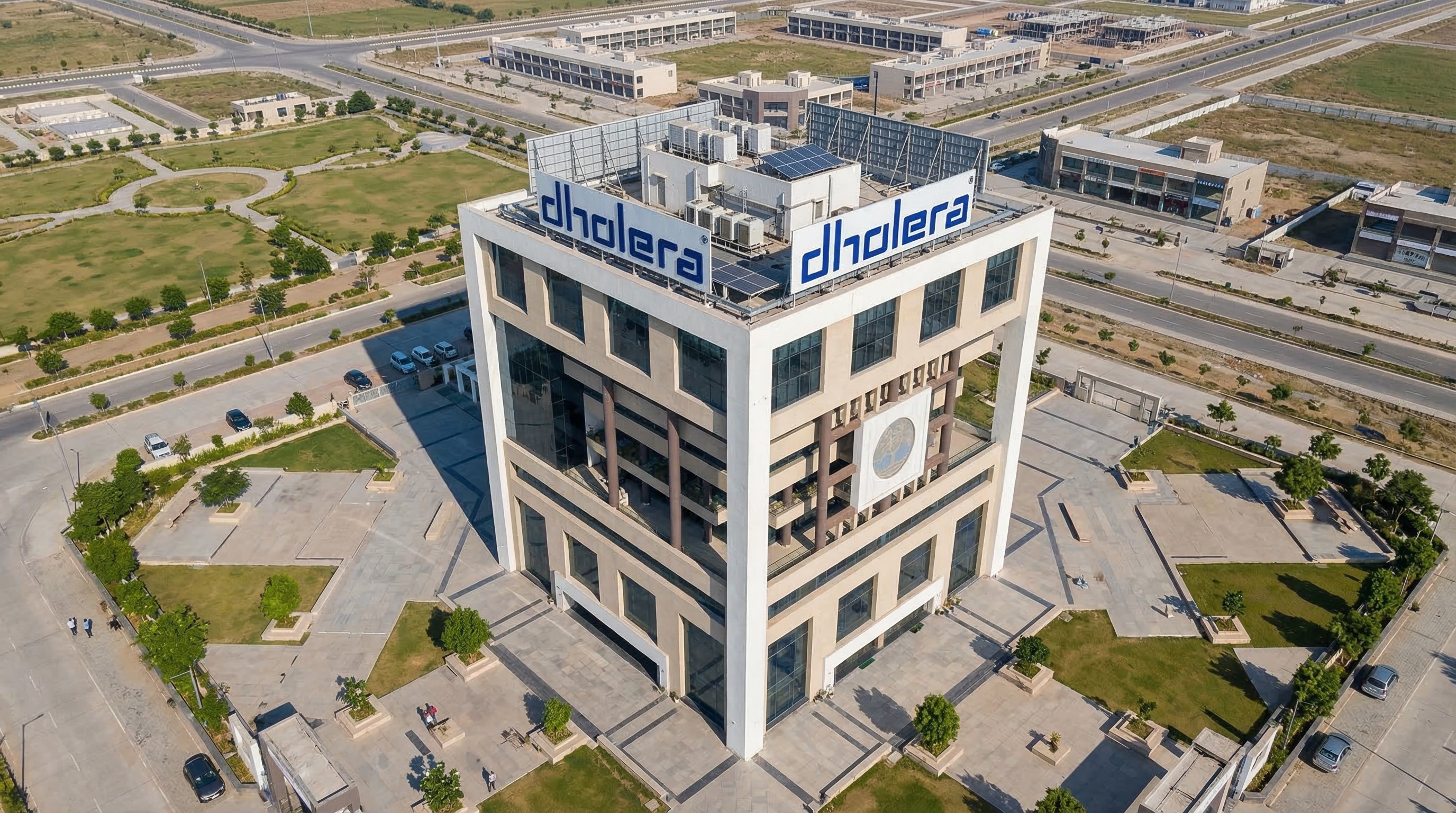
Large industrial-city projects require more than plans and notifications; they need a delivery institution that can contract, build, coordinate, and operate across agencies. In Dholera’s case, that institutional milestone arrived in 2016 with the creation of Dholera Industrial City Development Limited (DICDL), the Special Purpose Vehicle for infrastructure development and implementation. The official Dholera portal identifies this as a joint venture structure between the Government of Gujarat and the Government of India.
The equity structure itself is historically important. According to the official FAQ, 51% equity came from the Government of Gujarat through DSIRDA, contributed in the form of land, while 49% equity came from the Government of India through NICDIT, contributed in the form of cash. This mixed structure reflected a practical development model: land from the state side, capital support from the national industrial-corridor side. It signaled that Dholera was not merely a local development initiative, but one tied into the broader institutional framework of the industrial corridor program.
The DICDL phase matters because it fundamentally changed the character of the project. Before this, Dholera had laws, plans, authorities, and approvals. After DICDL, it had an SPV that could execute contracts, build infrastructure, manage land development, and anchor implementation timelines. This kind of SPV-led model is common in large corridor and industrial-city projects because it provides operational focus that standard departments often cannot sustain.
The official annual-report materials also reflect DICDL’s role in developing industrial and residential township areas together with trunk infrastructure and disposal of land, all in accordance with the Gujarat Special Investment Region Act, 2009 and the Gujarat Town Planning and Urban Development Act, 1976. This is important because it shows DICDL was not conceived as a narrow engineering contractor. It sits at the intersection of land development, trunk infrastructure, and urban-industrial servicing.
Institution-building is often overlooked in public narratives, but historically it is one of the clearest markers that a project is becoming real. A region can have strong branding and still fail if it lacks an implementation mechanism. Dholera’s SPV structure answered that challenge directly. It gave investors, contractors, regulators, and planners a dedicated counterpart. It also created a durable administrative identity for the project, which later became visible through annual reports, tenders, land policies, and operating assets.
This period also laid the groundwork for the next major step: shifting from region-wide ambition to a specific, prioritized area where physical execution could start. That next move became the Activation Area strategy, which allowed Dholera to begin building a functioning first phase rather than attempting to urbanize hundreds of square kilometres at once.